Which Swimming Pool Cleaner Should I Use?
Knowing which pool cleaner to buy when you’re new to pool ownership might be difficult. Do you get suction or manual? Is it robotic or under pressure? The answer is contingent on several factors, including the form and size of your Pool, its composition, and how unclean it gets. Then there are additional factors to consider, such as your money and lifestyle. Do you want to spend a few hours each week using a telescopic pole to clean your Pool? Or would you want to relax in your deck chair and let a robot take care of it?
It’s no surprise that new pool owners are confused!
But don’t worry; purchasing a pool cleaner is simpler than you imagine. In this article, we’ll go over how different cleaners function, who they’re made for, and how to pick the right one for your Pool. We’ve also included some maintenance advice to maintain your pool cleaner and in peak shape.
Pool cleaners come in a variety of shapes and sizes.
Let’s review the five types of pool cleaners available before we start. While they all keep your Pool clear of leaves, dirt, and bacteria, they do it in slightly different ways.
Manual Pool Cleaners
The user operates entry-level pool cleaners. Connected to the skimmer box, they include a vacuum head and hose attached to a telescopic pole. You can add attachments, like scrub brushes, to deal with stubborn debris or stains. Light, affordable, easy to use, and easy to remove tiny particles, they can be hard work if you have a big or dirty pool.
Suction Pool Cleaners
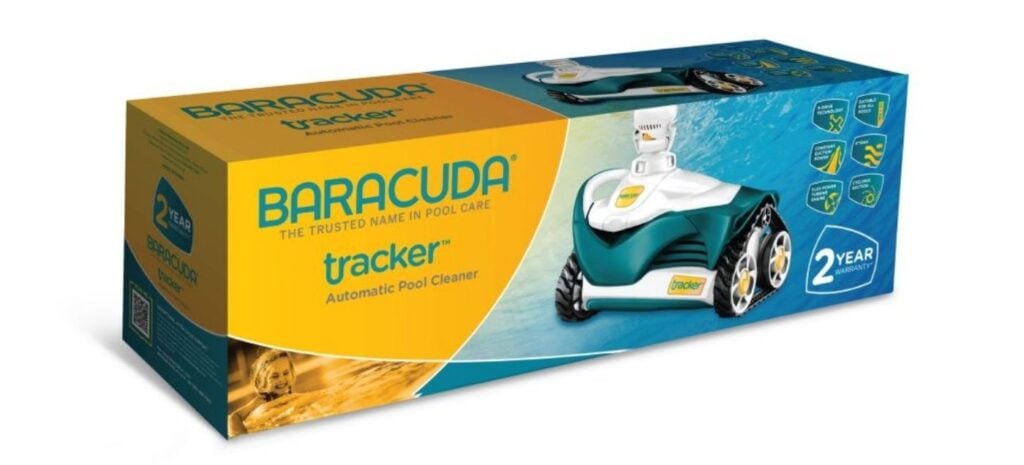
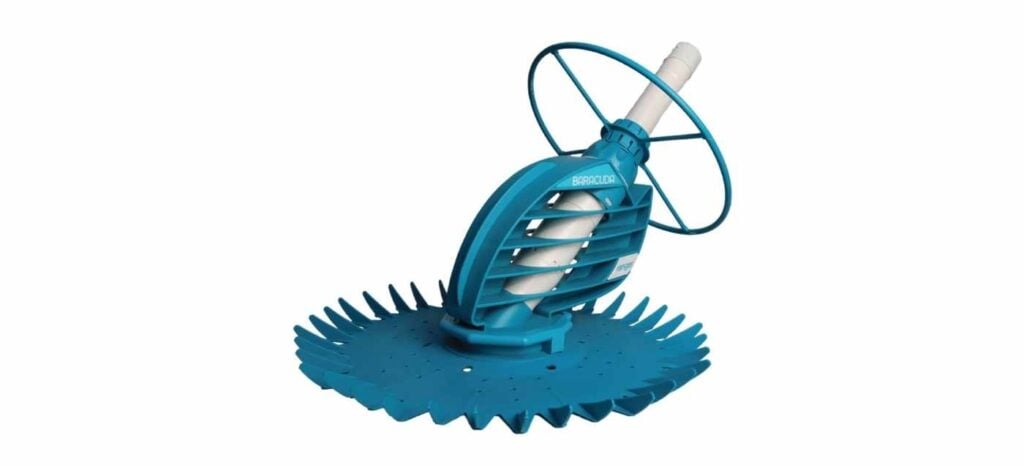
Most common automatic pool cleaners on the market. Made for small debris, they are easy to use; they clean using Pool’s filtration system, climb walls and pivot out of corners. More pricey than the manual vacuum; however, suction cleaners are easy to install, and spare parts are readily available.
Pressure Pool Cleaners
A step up from suction cleaners. Pressure Pool Cleaners work with Pool’s water return outlet or pressure line and are designed for pools that accumulate medium to large trash. High-pressure pool cleaners offer excellent climbing ability, especially on tile and fibreglass. They can get into narrow spaces, collect more material, and are less likely to clog. Pressure pool cleaners are more expensive and require more maintenance than manual or suction cleaners. On the other hand, they last longer and come with long hoses, and parts are readily available.
Robotic Pool Cleaners
They are expanding in acceptance and being easily understood. In contrast to other pool cleaners, robotic cleaners operate without the assistance of Pool’s filtration system and contain a motor. This prolongs the life of your pump and filters and reduces backwashing, which can help you save hundreds of litres of water annually.
Robots operate on low-voltage motors, which are more energy-efficient than conventional suction pool cleaners. This can reduce energy use to a minimum and save your Pool’s operating costs by as much as 83 per cent. Additionally, they include sophisticated filters that capture more material.
Unlike traditional pool cleaners, robotic pool cleaners don’t stay in the Pool continuously. Some, like the Baracuda Adventure, even have an auto-lift system that makes getting out of the Pool simple. On the downside, robotic pool cleaners cost more to purchase and repair than suction pool cleaners.
Picking the right Pool cleaner for your Pool
As long as they are installed properly and used frequently, all the pool cleaners in this article will do an excellent job cleaning your Pool. However, not all pool cleaners in this article are useful or even reasonably priced (such as manual pool cleaners) (e.g. pressure cleaners and in-floor systems). Therefore, we’ve chosen to concentrate on the two most common pool cleaners: suction and robotic.
But before you choose between suction and robotic pool cleaners, you need to consider the following criteria.
Longevity
Longer-lasting and still present in the Pool while not in use are suction pool cleaners. This implies that the frame, hose, and components may suffer damage from chlorine and UV. Because of this, they might only survive 3-5 years, with less expensive ones breaking down even earlier. On the other hand, robotic pool cleaners operate for shorter times and are not left in the Pool. Because of this, they don’t go through the same wear and can last for 5-8 years or longer if they’re expensive or well-kept.
Energy Efficiency
Only when your pool pump is turned on can suction pool cleaners operate. This implies that your pump will use more electricity while the cleaner is running. Suction cleaners typically require 1000W to operate. Robotic pool cleaners only consume 180W, translating to an 82 per cent reduction in energy costs. Additionally, compared to suction cleaners, which must use Pool’s filtering system, they require less backwashing and water loss due to their built-in filter.
Speed
Suction cleaners can clean your Pool in 4-6 hours, depending on its size and degree of debris. If you don’t empty your skimmer baskets, this may take longer. While premium versions may complete the task in as little as an hour, robots take between two and three hours.
Effectiveness
Suction cleaners operate continuously while your pump is running, but they occasionally stall or tangle, in which case you must untangle them. If they are unequipped and unable to climb up steps or walls, they may also miss dirt or stains. Robots, on the other hand, can cover 90–95 per cent of the Pool and can navigate the entire space. They also offer a swivel feature and smart navigation, which quickly and easily traverse and map your Pool.
Price
Suction cleaners are inexpensive because of their widespread use and straightforward construction. Additionally, it won’t cost you a fortune to find replacement parts. However, as robots require more specialized engineering, they are more expensive, and their parts can also be. Consider this while comparing models because, in general, the less expensive the cleaner, the shorter its lifespan.
Final Conclusion
There are so many cleaners on the market, from manual pool cleaners to built-in systems, that your mind will spin. How can you determine which one is best for your Pool, then? The best solutions for most backyard swimming pools are suction and robotic pool cleaners. They are widely used, efficient, user-friendly, and reasonably priced.
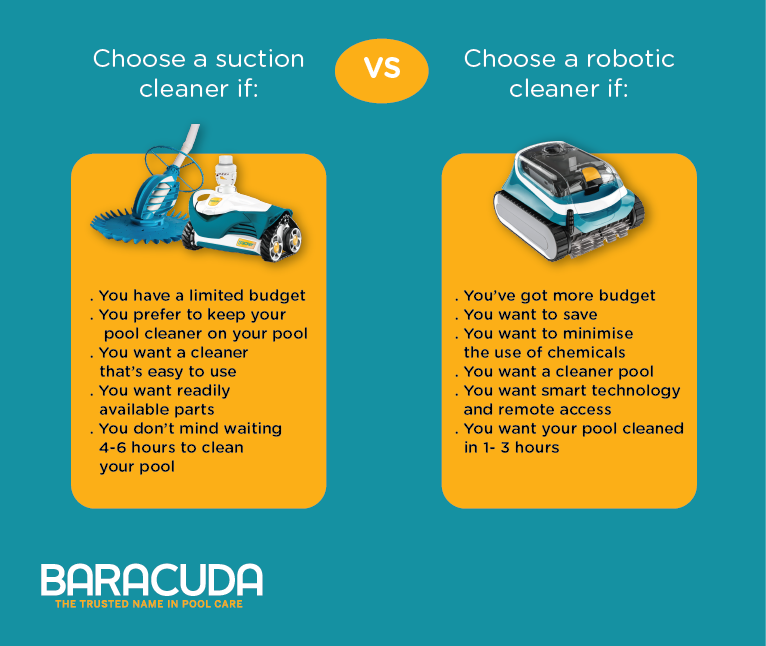
Check out our table of suggested Baracuda robotic and suction pool cleaners get started. You should be able to use it to identify the best cleaner for your pool type, way of life, and price range. Here is a simple guide if you struggle between robotic and suction.